
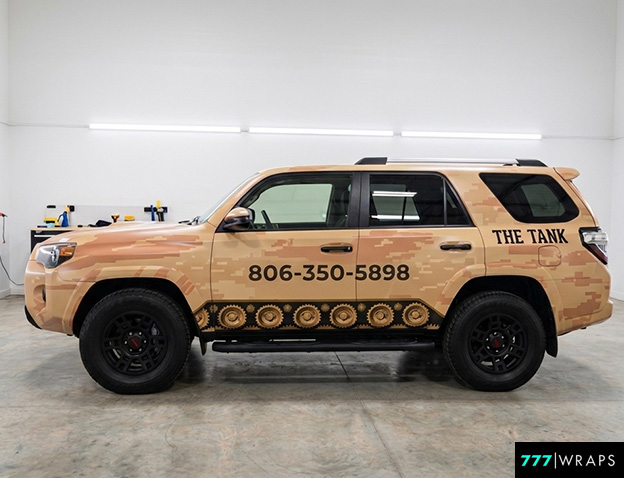
You spent good money on a vehicle wrap, parked it outside your shop, and waited for the phone to ring. A week goes by. Two weeks. Crickets. Meanwhile, your competitor’s truck rolls past with a wrap that looks half as fancy, and they’re booked solid through next month.
The wrap isn’t the problem. The design is.
A vehicle wrap is essentially a billboard moving at 45 miles per hour past someone scrolling their phone at a red light. You have roughly 3 to 5 seconds to communicate who you are, what you do, and how to reach you. Miss any of those, and you’ve just paid for expensive paint protection. Here’s how the right design choices turn your wrapped vehicle into a phone-ringing machine.
Drive around any city, and you’ll see wraps crammed with five fonts, seven photos, a QR code, social handles, an address, three phone numbers, and a tagline nobody will ever read. That’s not advertising. That’s visual noise.
The human eye filters out clutter automatically. When a wrap tries to say everything, it ends up saying nothing. Studies on outdoor advertising consistently show that messages with six words or fewer get retained at dramatically higher rates than longer ones. Your wrap needs to follow the same rules as a highway billboard, because functionally, that’s exactly what it is.

If a stranger can’t identify your business, your service, and your contact info in three seconds, the design has failed. Test it yourself: take a photo of your current wrap, show it to a friend for three seconds, then ask what the business does. If they hesitate, your call volume will too.
Script fonts on a moving vehicle become unreadable smudges. Photographs of products usually pixelate at scale, competing with your text. Dark backgrounds on dirty trucks lose all contrast within a week. Putting your website URL but no phone number forces people to remember a domain while driving, which almost never happens.
The fix is ruthless editing. Strip the design down to your logo, your offer, and your phone number. That’s it. Everything else dilutes the call to action.
A wrap design that performs in Dallas might flop in the Texas Panhandle. Local sun exposure, road conditions, and even regional color preferences affect both durability and response rates. Working with a shop that handles wraps Amarillo businesses rely on means the designer understands how wraps weather under intense UV, how dust affects matte finishes, and what color schemes stand out against the local landscape rather than blending in.
The right partner for vehicle wraps will push back on bad design choices, not just print whatever you hand them. That pushback is worth every penny.
A well-designed wrap pays for itself in months, not years. The math is simple: if your wrap generates two extra service calls per week at an average ticket of $300, that’s $2,400 a month in revenue you weren’t capturing before. Over the typical 5 to 7 year lifespan of a quality wrap, that’s six figures in attributable business from a one-time investment.
The design choices you make today determine whether that math works in your favor. If your current wrap isn’t generating the phone calls you expected, or you’re planning your first one and want to get it right, talk to a team that designs for response, not just aesthetics. Contact 777 Wraps for a design consultation that prioritizes ROI over flash.